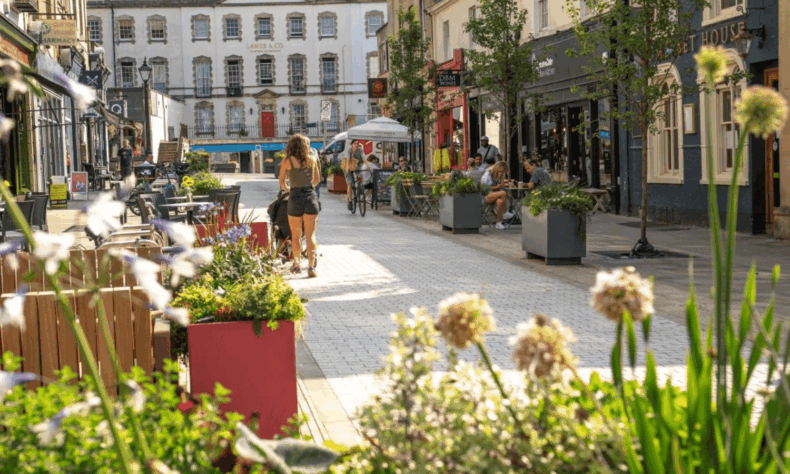
A new ‘Healthy Streets’ approach has been adopted to guide the design of future transport and street projects in Bristol in a bid to create places that are safer, cleaner, and more inclusive and attractive.
The decision, made by members of the Transport and Connectivity Committee on 14 May, means the council will put people, health and wellbeing at the centre of how streets are planned, used and managed.
A Design Check tool is used to assess transport schemes for:
- whether people feel welcome and safe
- how easy it is to cross the road
- air quality and noise levels
- access to shade, greenery, seating and things to do
These indicators are scored to give an overall picture of how well a street meets people’s needs. They guide design decisions, such as where to place crossings, benches, planting, cycle parking, and how the speed and volume of traffic are managed.
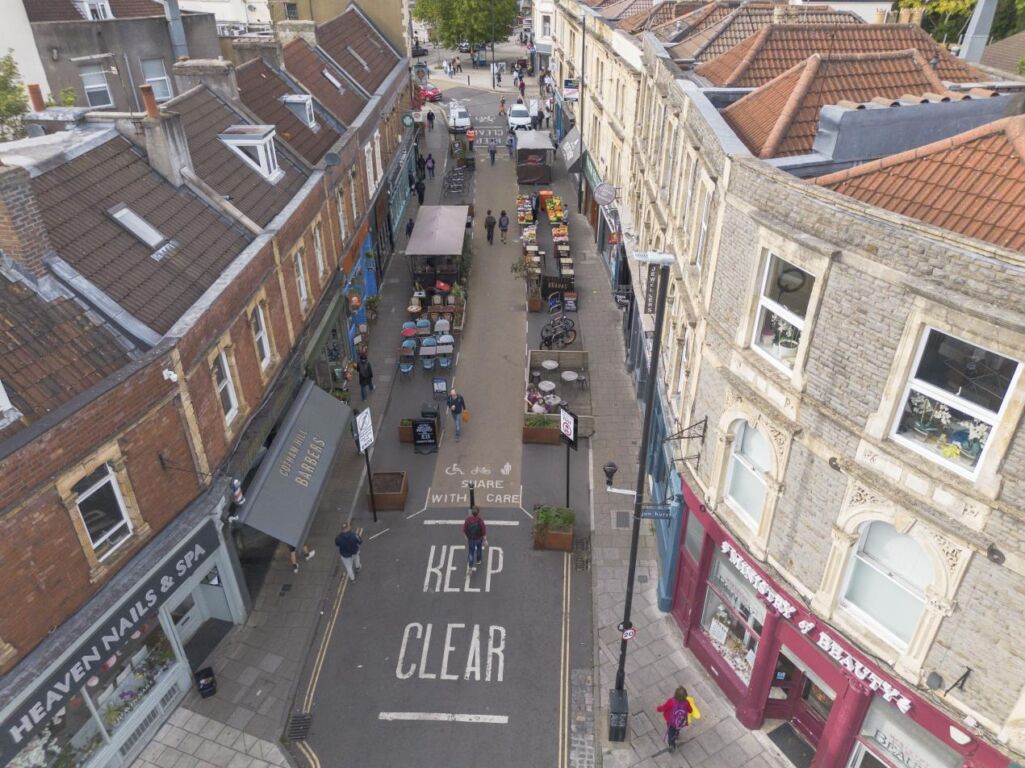
The approach applies to any street where people are expected to walk, wheel, cycle or access public transport, helping to make sure high quality streets and public spaces will be available across all parts of the city.
The council has already used the Design Check tool for some high profile transport projects, including Princess Victoria Street and Cotham Hill. These show the possibility of Healthy Streets when there is funding available for larger-scale schemes, but the approach can be for smaller improvements, such as a new crossing or more level paving.
Councillor Ed Plowden, Chair of the Transport and Connectivity Committee, said:
This widely used, tried and tested approach will give us a practical and people‑focused way to deliver positive transport schemes across Bristol.
It supports our goals to cut carbon emissions, improve air quality and nature recovery, reduce reliance on private cars, and make it easier for people to access jobs, services and opportunities across the city, as well as enjoy simply being outdoors whether moving or relaxing.
By using a consistent framework, we can make sure investment in transport delivers long‑term benefits for communities, the environment and the local economy, while making Bristol’s streets work better for everyone.
The Healthy Streets approach will see the council:
- align transport and health policies to embed health benefits into transport projects
- train transport officers to deliver Healthy Streets design and management
- continue working with communities using clear, accessible tools to shape local street improvements
Councillor Stephen Williams, Chair of the Public Health and Communities Committee, said:
Where we live, travel and spend time has a huge impact on our health and wellbeing.
The Healthy Streets approach helps address the wider causes of poor health, such as inactivity, air pollution and social isolation, by shaping healthier everyday environments.It also supports meaningful engagement with local people, ensuring communities help shape streets that work better for everyone.